Link Checker and Tracker: What It Is and How It Protects Your SEO

Backlinks built your rankings. Now something is quietly tearing them down and most website owners have no idea it's happening.
Every day, pages get deleted. Editors swap out links. Sites go down. A "dofollow" quietly becomes a "nofollow." And with every one of these changes, your site loses a small piece of the authority it took months sometimes years to earn.
This is why a link checker and tracker has gone from a nice-to-have tool to an absolute essential in 2026. It's not just about knowing who links to you. It's about knowing the moment something changes, so you can act before your rankings take the hit.
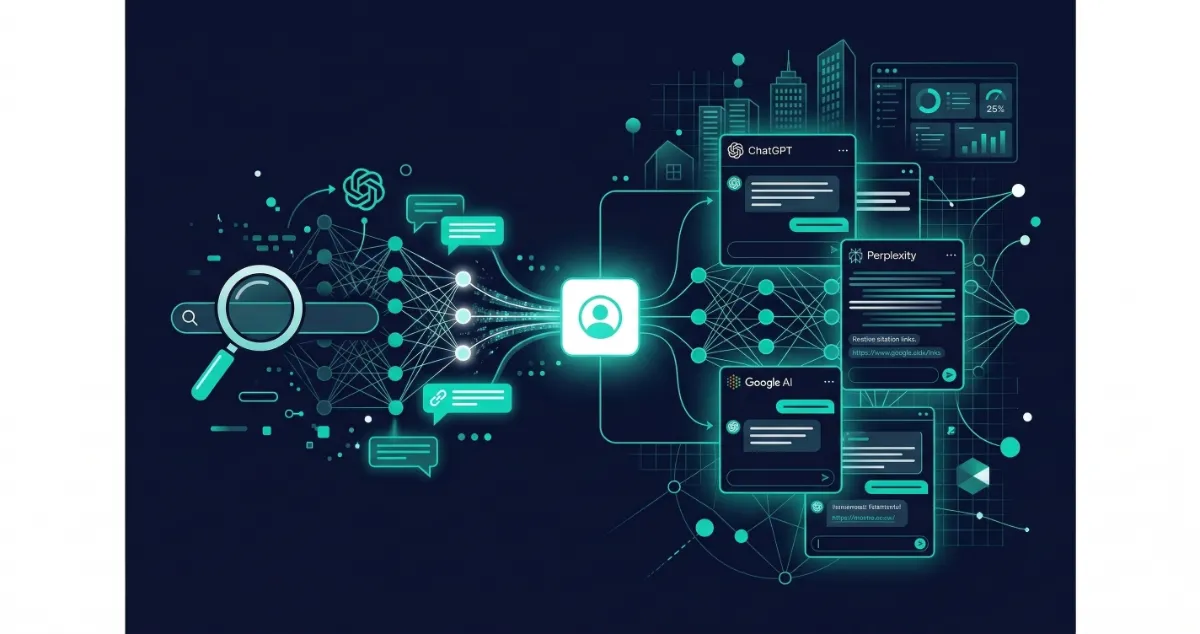
And here's the part that makes this even more urgent: backlinks no longer just influence Google. They directly shape how your brand appears in AI-powered search engines like ChatGPT, Perplexity, and Google AI Overviews. Lose enough high-quality links, and you don't just drop in the rankings you disappear from AI-generated answers altogether.
In this guide, we'll explain exactly what a link checker and tracker does, what common backlink problems look like in the wild, and how a tool like LynkDog gives you the protection you need in the modern SEO landscape.
What Is a Link Checker and Tracker?
A link checker and tracker is a tool that continuously monitors the backlinks pointing to your website and alerts you whenever something changes.
At a basic level, it tells you who's linking to you. At a professional level which is what businesses actually need it goes much further:
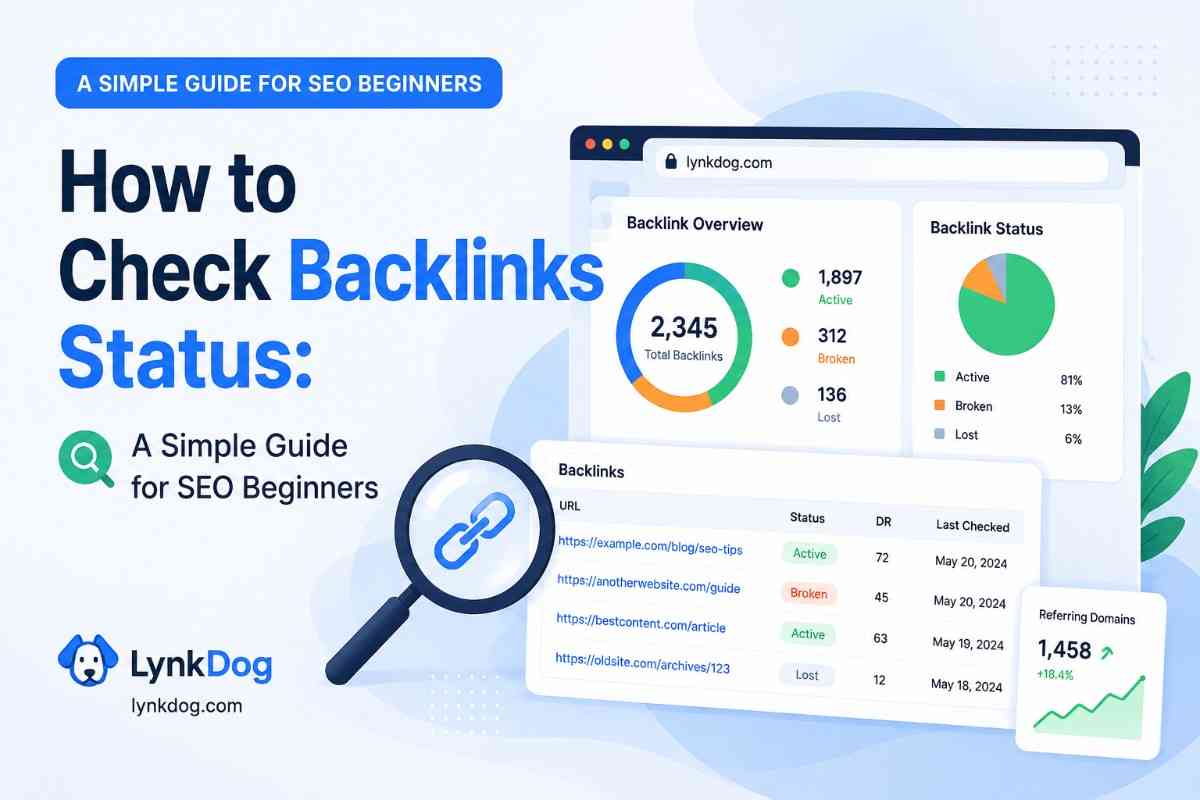
It checks whether each backlink is live or broken
It monitors HTTP status codes (200, 301, 302, 404, etc.)
It tracks anchor text and flags any changes
It detects when a dofollow link is switched to nofollow
It identifies when a linking page is deleted or redirected
It alerts you the moment a high-value backlink goes missing
In short, a good backlink tracking tool doesn't just take a snapshot it watches your link profile around the clock and tells you when something is wrong.
How Backlink Monitoring Works
Backlink monitoring is the ongoing process of crawling and analyzing the external links that point to your site. Here's what happens behind the scenes:
Discovery: The tool indexes all known backlinks to your domain from its own database and external sources (like Google Search Console data you connect).
Verification: Each link is regularly crawled to confirm it still exists, still points to the correct URL, and still carries the same attributes (dofollow, anchor text, destination page).
Change Detection: When anything changes a link disappears, a redirect is added, an anchor text is modified the system logs the change.
Alerts: You receive an instant notification via email or Slack so you can take action immediately.
Reporting: Over time, the tool builds a history of your backlink profile, so you can track trends, measure link-building ROI, and run full backlink audits on demand.
This cycle runs 24/7 with a platform like LynkDog, giving you continuous visibility rather than periodic snapshots.
The 5 Most Damaging Backlink Problems (And Why They're So Hard to Spot)
Most businesses discover backlink problems the hard way after their rankings drop. Here are the five most common issues that a broken backlink tracker is designed to catch:
1. Broken Links (404 Errors)
The most common problem. A page that was linking to you gets deleted or its URL changes, and the link now returns a 404 error. That link passes zero equity. If it was an important one, your rankings will feel it.
Real-world scenario: A tech blogger writes a roundup featuring your SaaS tool. Six months later, they restructure their site and that post gets a new URL without a redirect. The original link breaks. You had no idea. Your competitor's link in the same post keeps working.
2. Deleted Backlinks (Lost Links)
Sometimes a page stays live but the editor removes your link specifically. This is especially common after site redesigns, content updates, or editorial cleanups. These are lost backlinks and they're invisible unless you're actively monitoring.
3. Nofollow Attribute Changes
A link that passes SEO value (dofollow) can be quietly switched to nofollow by the linking site. This is a significant change the link still appears in your profile but no longer transfers any ranking power. Without SEO link monitoring, you'd never know.
4. Anchor Text Edits
Anchor text gives Google context about what your linked page is about. If a site changes your anchor text from your target keyword to something generic like "click here," you lose that relevance signal. A link checker and tracker logs every anchor text change so nothing slips past you.
5. Redirected Pages
When a linking page gets redirected especially through multiple hops the link equity passed to your site can weaken or disappear entirely. Redirect chains (301 → 301 → 301) dilute value significantly, and some redirects pass no equity at all.
Why Lost Backlinks Hurt Your Rankings and AI Visibility
Losing backlinks has always hurt SEO. But in 2026, the damage goes beyond Google rankings.
The Traditional SEO Impact
Google's algorithm still treats backlinks as votes of confidence. When those votes disappear:
Your domain authority score decreases
Individual pages lose ranking positions
Competitors who maintain their link profiles overtake you
Recovering lost ground requires new link building which is expensive and time-consuming
The New Threat: AI Search Visibility
This is where AEO (Answer Engine Optimization) and GEO (Generative Engine Optimization) come into play.
AI search engines ChatGPT, Perplexity, Google's AI Overviews don't rank pages. They generate answers. And when they decide whose content to surface, they lean heavily on signals that indicate authority and trustworthiness. Backlinks are a core part of that signal.
Here's the chain reaction when you lose important backlinks:
Signal Lost | Effect on Traditional SEO | Effect on AI Search |
|---|---|---|
High-authority dofollow link | Lower domain rating | Less likely to be cited in AI answers |
Multiple links from one referring domain | Drop in topical authority | AI treats you as less of a subject expert |
Anchor text keyword link | Reduced keyword relevance | AI less likely to associate you with that topic |
Links from news or editorial sources | Lower trust signals | AI prefers authoritative, well-linked sources |
Businesses that aren't monitoring their backlinks aren't just risking Google rankings they're risking their entire presence in the AI-powered information ecosystem.
7 Core Benefits of Using a Backlink Tracking Tool
A dedicated backlink tracking tool delivers value that no manual process can replicate:
1. Real-time awareness. You know the moment a backlink changes, not weeks later when the ranking damage is already done.
2. Proactive link recovery. When you catch a lost link quickly, you can email the site owner and get it reinstated. Wait too long and the window closes permanently.
3. Negative SEO protection. Competitors can build spammy links to your site intentionally. Monitoring catches unusual link spikes early so you can disavow before Google notices.
4. Accurate link-building ROI. Know exactly which outreach campaigns produced links that stayed live and which ones quietly disappeared after a month.
5. Cleaner backlink audits. Regular monitoring means less cleanup work during quarterly audits. You're addressing issues in real time rather than discovering 200 problems at once.
6. Competitive intelligence. Track which domains are linking to competitors and identify patterns you can replicate in your own link-building strategy.
7. AI search protection. Maintain the strong link signals that AI search engines use to decide whether your content is worth featuring in generated answers.
How Link Monitoring Protects Your Long-Term SEO Performance
Backlink management isn't a campaign it's an ongoing discipline. Here's how consistent link monitoring compounds into real SEO advantages over time:
You Stop Losing Ground Silently
Most ranking drops don't happen because of a Google update. They happen because of gradual, invisible erosion links going stale, pages going down, editorial decisions you had no part in. Monitoring puts you back in control.
You Build a Defensible Link Profile
When you respond quickly to lost or broken links, your overall link health stays high. A consistently healthy backlink profile is far more resilient to algorithm changes than one that's been silently degrading for months.
You Create a Feedback Loop for Link Building
When you can see which links stay live long-term and which disappear quickly, you start making smarter decisions about where to focus your link-building efforts. Some sites are simply better long-term partners than others.
You Strengthen Your Authority Signals for AI
As AI search engines become a more significant source of organic traffic, the sites that maintain strong, healthy backlink profiles will dominate AI-generated answers. This is not speculation it's already happening.
AEO and GEO: Why Backlinks Matter for AI Search in 2026
Let's go deeper on AEO and GEO SEO - two frameworks that are reshaping how we think about search visibility.
AEO (Answer Engine Optimization) focuses on getting your content cited in direct answers provided by AI engines like ChatGPT and Perplexity. These engines pull from sources they consider authoritative. Backlinks are a major trust signal that tells AI systems: this source has been validated by other credible websites.
GEO (Generative Engine Optimization) focuses on optimizing content so that AI models naturally include it in generated responses. Research has shown that content from well-linked, authoritative sources is significantly more likely to appear in AI-generated outputs.
What this means practically: every backlink you lose is a small vote withdrawn from your authority profile. Lose enough of them, and AI search engines stop citing you entirely.
A link checker and tracker is therefore not just an SEO tool it's an AI search visibility tool. Protecting your backlinks protects your presence in the future of search.
Best Practices for Backlink Management in 2026
Here's a framework that SEO professionals and agencies can implement immediately:
Set up 24/7 automated monitoring. Manual checks are too slow and too infrequent. Use a tool that watches your backlinks continuously.
Prioritize high-value links. Not all links deserve equal attention. Focus your recovery efforts on links from high-authority domains and topically relevant sources.
Create a lost link outreach template. When a link disappears, you need to act fast. Have a polished, professional email ready to send to webmasters within 24 hours of detection.
Audit your disavow file quarterly. Your disavow file should reflect your current toxic link situation not one from two years ago. Regular backlink audits keep it accurate.
Track anchor text diversity. Over-optimized anchor text is a risk signal. Monitor your anchor text distribution and ensure it stays natural.
Document your link history. Historical backlink data is invaluable when diagnosing ranking drops or preparing for site migrations. Keep records.
Integrate monitoring with your reporting workflow. Share backlink health metrics with clients or stakeholders monthly. It demonstrates proactive SEO management and builds trust.
How LynkDog Helps You Monitor and Protect Your Backlinks
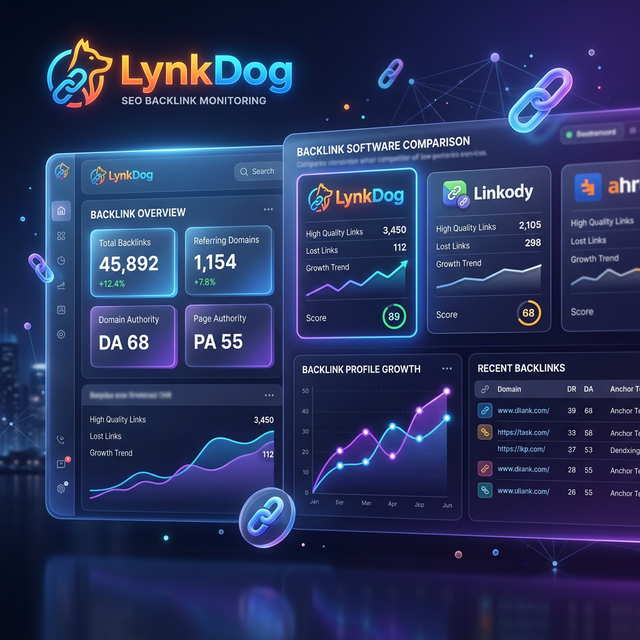
LynkDog is a modern backlink monitoring platform built for the demands of both traditional SEO and AI-era search visibility.
Here's what makes it purpose-built for 2026:
24/7 Automated Backlink Monitoring
LynkDog crawls your backlinks around the clock not once a week, not daily. The moment a link changes, the system knows.
Instant Alerts via Email and Slack
When a valuable backlink is lost, broken, or modified, you get an instant notification through your preferred channel. No more discovering problems days later in a weekly report.
Anchor Text and Attribute Tracking
LynkDog logs every anchor text change and dofollow/nofollow switch, giving you a complete, auditable history of how each backlink has evolved over time.
HTTP Status Code Monitoring
Every backlink is checked against its HTTP status code. 404s, 301 redirect chains, 302s LynkDog surfaces them all so you can act before Google re-crawls and processes the change.
Full Backlink Audit History
Run a complete backlink audit at any time with historical trend data. See how your link profile has grown (or shrunk) over any time period useful for client reporting, site migrations, and strategic planning.
AI Visibility Protection
LynkDog is built with AEO and GEO in mind. By helping you maintain a healthy, authoritative backlink profile, it directly protects the signals that AI search engines use to decide whether your content gets cited in generated answers.
Multi-Site Management
Agencies and SaaS founders managing multiple properties can monitor all their domains from a single dashboard with per-site reporting and alerting.
Internal Link Suggestion: Link "backlink audit" to /blog/backlink-audit-guide and "monitor backlinks" to /features/backlink-monitoring once those pages are live on LynkDog.
Frequently Asked Questions
Q: What is a link checker and tracker? A link checker and tracker is a tool that monitors the backlinks pointing to your website, checking whether they're live, dofollow, correctly anchored, and still pointing to the right page. It alerts you whenever a backlink changes or disappears.
Q: How often should I monitor my backlinks? Continuous, 24/7 monitoring is best. At a minimum, check your backlink profile weekly and run a full audit quarterly. High-traffic or competitive sites should use real-time monitoring tools like LynkDog.
Q: What happens when I lose a backlink? You lose the link equity (SEO authority) that link was passing to your site. If it was a high-authority link, you may notice a ranking drop within a few weeks. Acting quickly by reaching out to reclaim the link gives you the best chance of minimizing the damage.
Q: Can lost backlinks affect AI search results? Yes. AI search engines like ChatGPT, Perplexity, and Google AI Overviews use authority signals including backlinks to decide whose content to surface in generated answers. A weaker backlink profile means less AI search visibility.
Q: What is a broken backlink tracker? A broken backlink tracker specifically identifies backlinks that return error codes (like 404 Not Found), meaning the link exists but points to a dead page. These links pass no SEO value and need to be reclaimed or replaced.
Q: How do I fix lost or broken backlinks? Contact the webmaster of the linking site and politely explain the issue. For broken links caused by URL changes on your own site, ensure proper 301 redirects are in place. For links removed entirely, provide updated content that justifies re-inclusion.
Q: Is backlink monitoring only for large websites? No. Small businesses, bloggers, and local sites can be significantly impacted by even a handful of lost backlinks. Any site investing in link building should also be monitoring what they've earned.
Final Thoughts: Your Backlinks Are an Asset Protect Them
You wouldn't build a product and never check if it was working. You wouldn't run ad campaigns and never look at the results. So why would you earn backlinks and never check if they're still doing their job?
A link checker and tracker is the infrastructure that keeps your SEO investment working. It closes the gap between the links you've earned and the rankings you deserve and in a world where AI search engines are rewriting what "visibility" means, it's the difference between being cited and being invisible.
LynkDog is built for exactly this moment. Whether you're an SEO agency protecting client rankings, a SaaS founder building authority in a competitive niche, or a marketer trying to prove ROI on your link-building campaigns LynkDog gives you the real-time intelligence to act fast and stay ahead.
→ Start monitoring your backlinks with LynkDog free trial, no credit card required.